
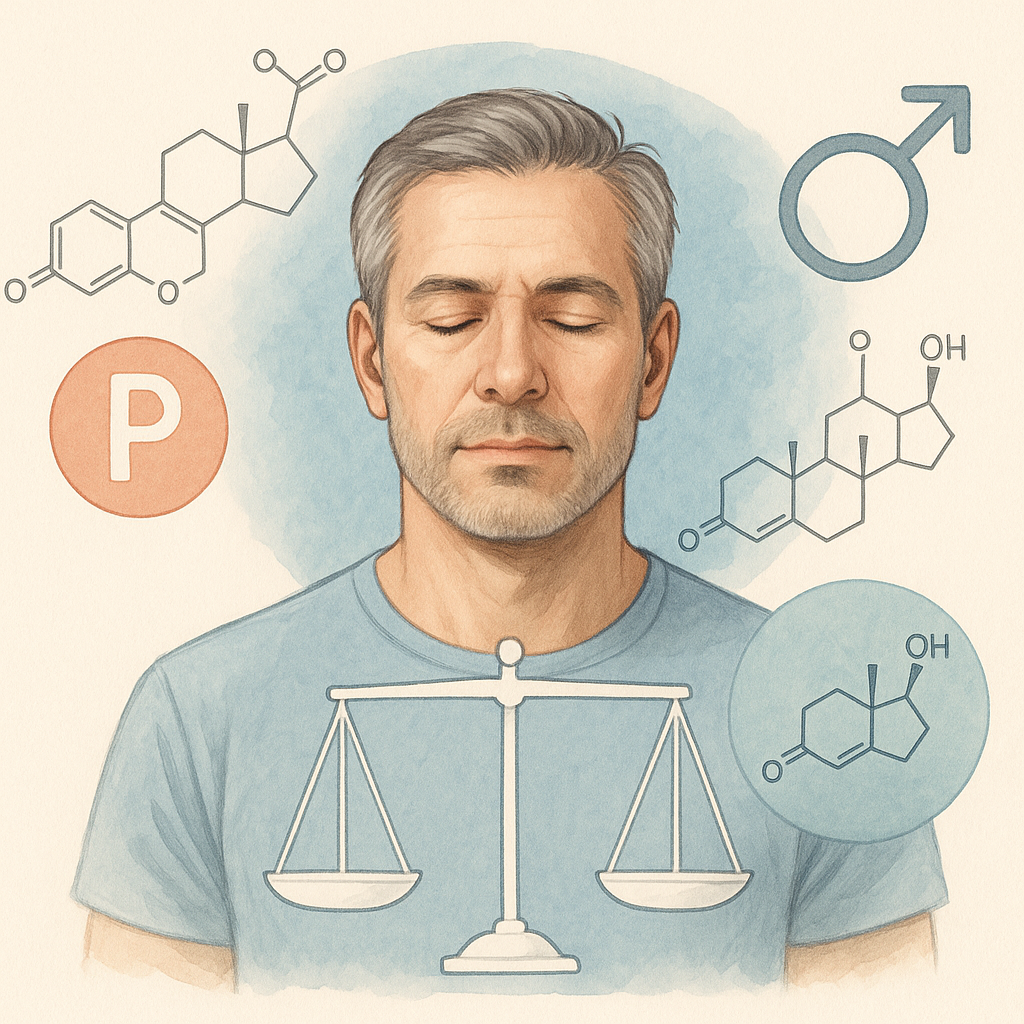
When people hear the word progesterone, they often think of women’s health—fertility, menstruation, or menopause. But what many don’t realize is that progesterone plays a critical role in men’s health too. While testosterone often takes the spotlight, progesterone quietly supports nearly every system in the male body. When it’s out of balance, men can experience fatigue, irritability, weight gain, loss of muscle mass, and even sexual dysfunction.
Let’s take a closer look at why men need progesterone and how therapy can help restore balance, energy, and vitality.
Understanding Progesterone in Men
Progesterone is not just a “female hormone.” In fact, both men and women produce it, though in different amounts. In men, progesterone is made primarily in the adrenal glands and testes. It acts as a precursor hormone, meaning it’s necessary for the production of other vital hormones like testosterone and cortisol.
Here’s what progesterone helps regulate in the male body:
- Balances estrogen levels: Men produce estrogen too, and when progesterone is low, estrogen can dominate—leading to mood changes, weight gain, and even gynecomastia (male breast tissue growth).
- Supports testosterone production: Progesterone helps maintain optimal testosterone levels and prevents its conversion into dihydrotestosterone (DHT), which can contribute to hair loss and prostate issues.
- Improves sleep and mood: Progesterone has a natural calming effect on the brain through its interaction with GABA receptors, helping reduce anxiety and improve sleep quality.
- Protects the prostate: Balanced progesterone levels may reduce inflammation and help protect the prostate from abnormal growth.
- Supports cardiovascular and brain health: Research suggests that progesterone plays a role in protecting brain tissue and maintaining healthy blood pressure.
What Happens When Progesterone Is Low
Low progesterone in men is more common than most realize—especially with age, chronic stress, or exposure to environmental toxins that disrupt hormone balance.
Common symptoms include:
- Fatigue or loss of motivation
- Increased body fat, especially around the midsection
- Mood swings, irritability, or anxiety
- Poor sleep quality or insomnia
- Low libido or erectile dysfunction
- Muscle loss or difficulty gaining muscle
- Hair loss
- Prostate enlargement
Many of these symptoms are often mistaken for “just getting older,” but hormone imbalance is frequently the real cause.
The Role of Progesterone Therapy
Progesterone therapy for men can help restore balance by optimizing the ratio between testosterone, estrogen, and cortisol. This is often done using bioidentical progesterone—chemically identical to what the body naturally produces.
When prescribed and monitored by a qualified healthcare provider, progesterone therapy may help:
- Improve sleep and mood
- Boost libido and energy levels
- Reduce estrogen dominance
- Enhance muscle strength and recovery
- Support prostate and brain health
- Promote a sense of calm and overall well-being
Progesterone vs. Testosterone Therapy
Some men start testosterone therapy thinking it will solve all their hormonal issues, only to find their symptoms persist—or even worsen. That’s because adding testosterone without addressing progesterone and estrogen balance can backfire.
Progesterone acts as a regulator—it prevents testosterone from converting excessively into estrogen or DHT. In many cases, optimizing progesterone first can make testosterone therapy more effective and reduce side effects like irritability, bloating, or water retention.
How to Know If You Need It
If you’re experiencing symptoms of hormone imbalance, the first step is a comprehensive hormone panel. This should include progesterone, testosterone, estrogen (estradiol), cortisol, and DHEA levels.
Work with a provider who specializes in hormone replacement therapy (HRT) or integrative men’s health. They can help you interpret your results and determine whether progesterone therapy—or a more holistic hormone balancing plan—is right for you.
Final Thoughts
Progesterone is often overlooked in men’s health, but it’s one of the most important hormones for maintaining balance, energy, and long-term vitality. Whether you’re struggling with fatigue, mood swings, or low libido, restoring progesterone levels may be the missing piece of the puzzle.
Hormonal balance isn’t just about boosting testosterone—it’s about supporting the entire system. And for men, that starts with giving progesterone the respect it deserves.
Disclaimer:
This article is for educational purposes only and not a substitute for professional medical advice. Always consult your healthcare provider before starting or changing any hormone therapy.